
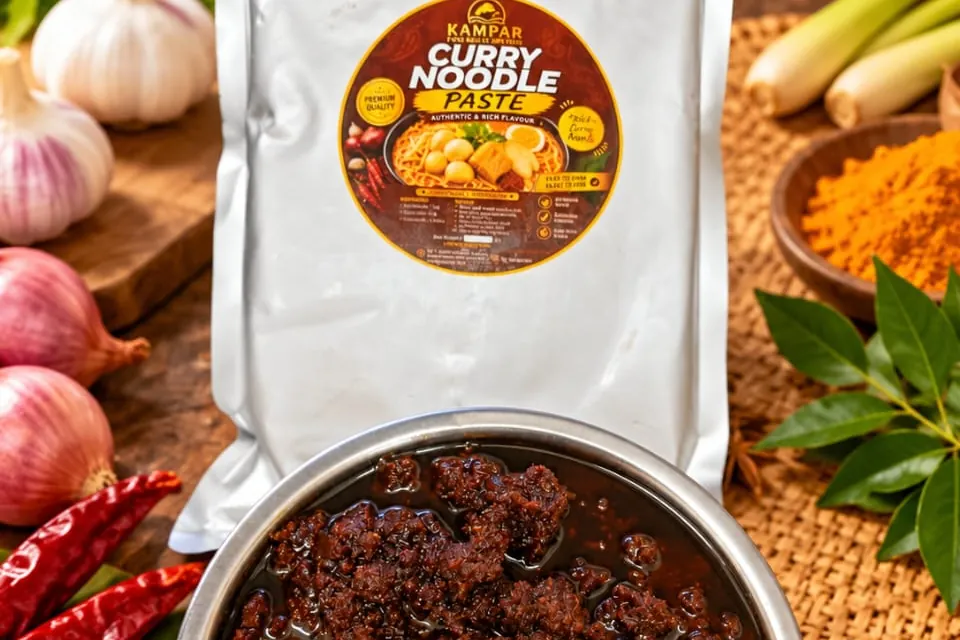
What are curry noodles?
Curry noodles are noodles served in a spiced curry broth, usually enriched with coconut milk. Across Malaysia you will find many versions, from light and soupy to thick and rich, but most share the same structure: a curry base, a mix of noodles and a generous set of toppings.
Styles differ from place to place: some bowls are light and soupy, others thick and rich with coconut milk. Toppings differ too, from tofu puffs and long beans to chicken, prawns or cockles. At home, you can build the bowl around what your family likes, with fish balls at the centre.
Fish products are a natural fit. Fried fish balls, stuffed beancurd skin (酿腐竹), stuffed tofu (酿豆腐) and fish cake all soak up the curry, while classic fish balls add a springy, clean contrast. A good curry noodle bowl is as much about these toppings as it is about the broth.
Our Kampar Curry Noodle Paste
Making curry paste from scratch means grinding chillies, shallots, garlic, lemongrass and spices, then frying the paste slowly, which takes hours. Our Kampar Curry Noodle Paste is made with 20 types of spices and slowly stir-fried for about three hours, so that work is done before it reaches your kitchen. It sits beside our main line, the five core ingredients of Kampar fish ball noodles, several of which suit curry very well.
The paste is already seasoned. To make the curry soup, you add chicken stock and coconut milk in the proportions we recommend. We give every customer preparation guidance, so ask us for the proportions for the amount you plan to cook. Ask us too about pack size, spice level, ingredients and storage before you order, and whether you need it for home cooking or for a food business.
What you need
This table lists the parts of a typical bowl. Quantities depend on how many bowls you make; ask us for the recommended proportions of paste, chicken stock and coconut milk.
| Part | What to use | Notes |
|---|---|---|
| Curry base | Kampar Curry Noodle Paste | Already seasoned; made with 20 types of spices |
| Soup | Chicken stock and coconut milk | In the proportions we recommend for the paste |
| Noodles | Yellow noodles and rice vermicelli (bee hoon) | A mix of the two is a popular choice |
| Fish toppings | Fried fish balls, stuffed beancurd skin (酿腐竹), stuffed tofu (酿豆腐), classic fish balls, fish cake | Fried items soak up the most curry |
| Other toppings | Tofu puffs, long beans, bean sprouts, boiled egg | Choose what your family or customers like |
| Garnish | Mint leaves, sliced chilli, lime | Add just before serving |
Step by step: making the bowl
Make the curry soup first, using the proportions and preparation guidance we give you for the paste, then cook the toppings in it and assemble the bowls.
- Make the curry soup with the paste, chicken stock and coconut milk, following our recommended proportions and preparation guidance.
- Keep the soup hot while you prepare the rest of the bowl.
- Add the fish balls, fried fish balls and tofu puffs, and simmer until the fish balls float and are hot right through.
- Then add sliced fish cake and stuffed beancurd skin (酿腐竹), and heat them until hot right through and coated in the curry.
- Meanwhile, blanch the noodles, bean sprouts and long beans in a separate pot of boiling water, then drain.
- Put the noodles and vegetables in a bowl, top with the fish balls and other toppings, and ladle over the hot curry.
- Garnish with mint, sliced chilli and a wedge of lime.
For more on cooking times for fish balls, see our guide to cooking fish balls.
Serving and garnishing
Curry noodles are best served the moment they are assembled, while the noodles are springy and the fried toppings still hold some bite. Warm the bowls with hot water first so the curry stays hot for longer at the table.
- Serve sambal or sliced chilli on the side for anyone who wants more heat.
- Add a squeeze of lime just before eating to brighten the curry.
- Offer extra fried fish balls as a side for big appetites.
- Keep the remaining curry simmering gently on the stove for second helpings.
Choosing the fish toppings
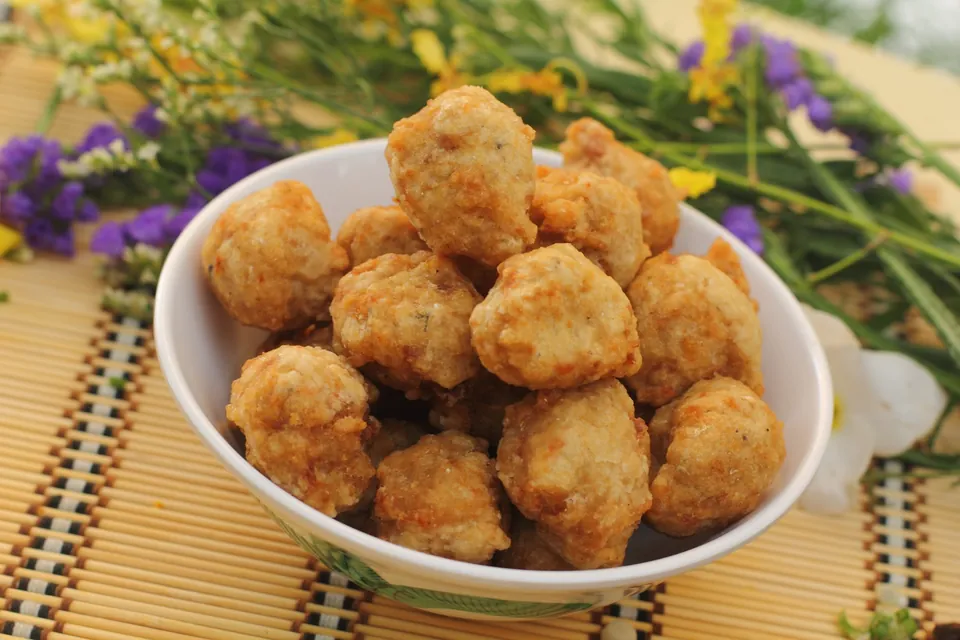
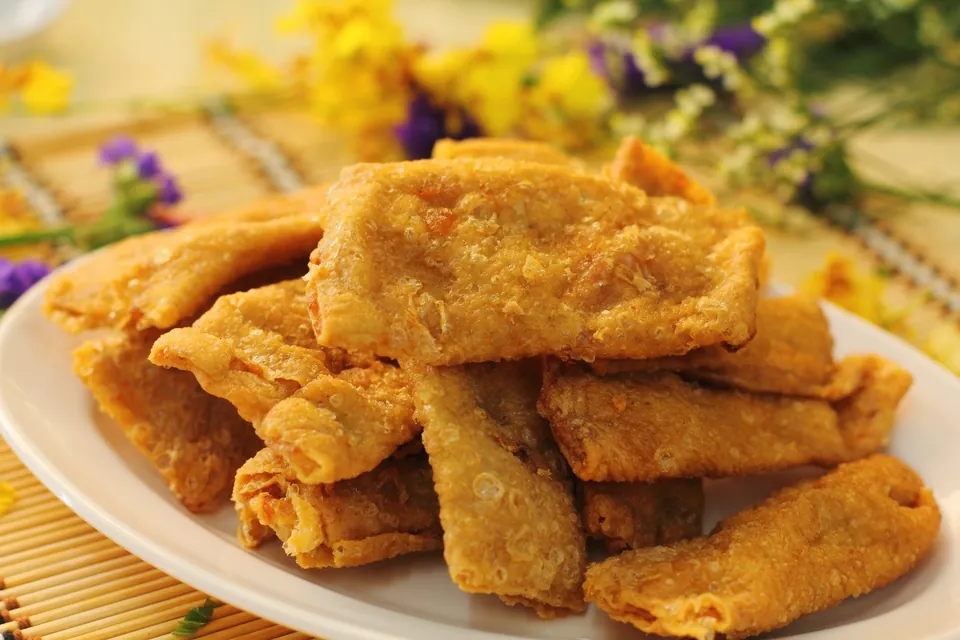
Fried fish balls, such as our Jow Yuan, are the classic curry noodle topping: the fried surface acts like a sponge for the curry. Our stuffed beancurd skin (酿腐竹) does the same, turning soft and full of flavour, and stuffed tofu (酿豆腐) takes on the curry while staying soft. Add classic fish balls and fish cake for contrast in texture.
- Jow Yuan (fried fish balls): soak up curry and stay soft inside.
- Stuffed beancurd skin (酿腐竹): absorbs the broth and adds a silky texture.
- Stuffed tofu (酿豆腐): soft tofu and springy fish paste in every piece.
- Classic fish balls: springy and clean-tasting, a balance to the rich curry.
- Fish cake: sliced thinly, quick to heat and easy to share.
Our guide to the types of fish balls explains each product in the range and the dishes it suits.
Make it your way
- Curry hotpot: the paste also suits curry hotpot. Ask us for the proportions for a hotpot, bring the pot to the table and let everyone cook fish balls, fish cake and stuffed items in the curry. Our steamboat guide has more on planning a shared pot.
- Your choice of noodles: yellow noodles, rice vermicelli (bee hoon) or a mix of the two.
- For milder tastes: keep the sliced chilli and sambal on the side, and ask us about the spice level before you change anything in the soup.
- Dry curry noodles: toss the noodles in a few ladles of thick curry and serve the toppings on top.
- Curry fish balls as a snack: simmer fish balls in the curry on their own and serve on sticks.
Curry noodles for food businesses
Curry noodles are a strong seller for noodle stalls, coffee shops and caterers, and our paste is made for curry mee hawkers, restaurants and new food businesses. Because it is already seasoned, using the same recommended proportions each time gives every batch the same starting point, and fish toppings are quick to portion during busy service.
- Make the curry soup in batches with the same recommended proportions, and keep it hot during service.
- Portion fish toppings in advance so each bowl gets the same amount.
- Keep uncooked fish products chilled until they go into the curry.
- Ask for preparation guidance before your first batch, and ask about quantities of paste and fish products for your expected sales.
Our guide for restaurants and noodle shops explains how to estimate weekly quantities, and you can request a quotation on the wholesale page.
Storing leftover curry
Curry broth with coconut milk should be cooled and refrigerated promptly. The WHO Five Keys to Safer Food recommend refrigerating cooked food within 2 hours and reheating it until steaming hot.
- Store leftover curry separately from the noodles, which turn soft if left in the broth.
- Refrigerate within 2 hours in a covered container.
- Bring the curry back to the boil before serving again.
- Ask us how to store the paste once it is opened.
Quick answers
Can I add fish balls straight from frozen?
If the pack allows it, yes: add them to the simmering curry and allow a few extra minutes, checking that the centre is hot before serving.
How spicy is the Kampar Curry Noodle Paste?
Ask us about the spice level before you order, and tell us if you need a milder pot, for example for children, so we can advise you.
Can I buy the paste with fish balls for my stall?
Ask us. Send your location, the products you need and your estimated quantity, and we will confirm availability and pricing.
Do I need to add salt to the curry?
The paste is already seasoned. Make the soup with chicken stock and coconut milk in the proportions we recommend, and taste it before you change anything.
Can I use the paste for curry hotpot?
The paste suits both curry mee and curry hotpot. Ask us for the proportions for a hotpot when you order.