What you are ordering
金宝粉, short for 金宝鱼丸粉, is Kampar fish ball noodles: a bowl of noodles with a clear broth or a dry dressing, topped with fish balls and stuffed items. 金宝 is the Chinese name for Kampar, the Kinta Valley town most closely linked with the dish, and 粉 is a common word for noodles. Today you will find the bowl in kopitiams across Perak and well beyond.
What makes it a Kampar bowl is the set of toppings. A full bowl usually carries five of them: white fish balls, fried fish balls, dried cuttlefish balls, stuffed beancurd skin and stuffed tofu. Ordering is mostly about choosing your noodles, deciding between soup and dry, and saying which toppings you want.
Step 1: choose your noodles
Most stalls offer several noodles, and many let you mix two in one bowl. If you are not sure, yellow noodles or kuey teow are safe first choices.
| Noodle | Chinese | What it is like | Good for |
|---|---|---|---|
| Yellow noodles | 黄面 | Springy wheat noodles | Soup or dry |
| Rice vermicelli (bee hoon) | 米粉 | Thin and light | Soup, when you want the broth to lead |
| Flat rice noodles (kuey teow) | 粿条 | Soft and smooth | Clear soup |
| Silver needle noodles (lou shu fun) | 老鼠粉 | Short and chewy | Soup or dry, a Perak favourite |
| Thin egg noodles | 幼面 | Fine and bouncy | Dry (kon loh) |
Mixing is common: yellow noodles with bee hoon is a popular pair, because you get both bite and lightness. Just name both, for example "yellow noodles and bee hoon".
Step 2: soup or dry?
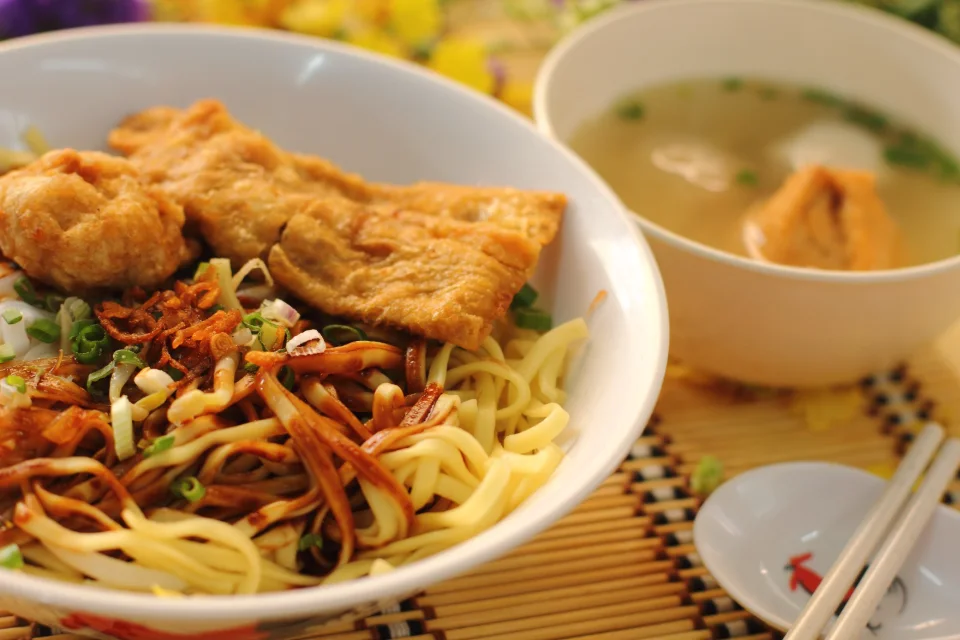
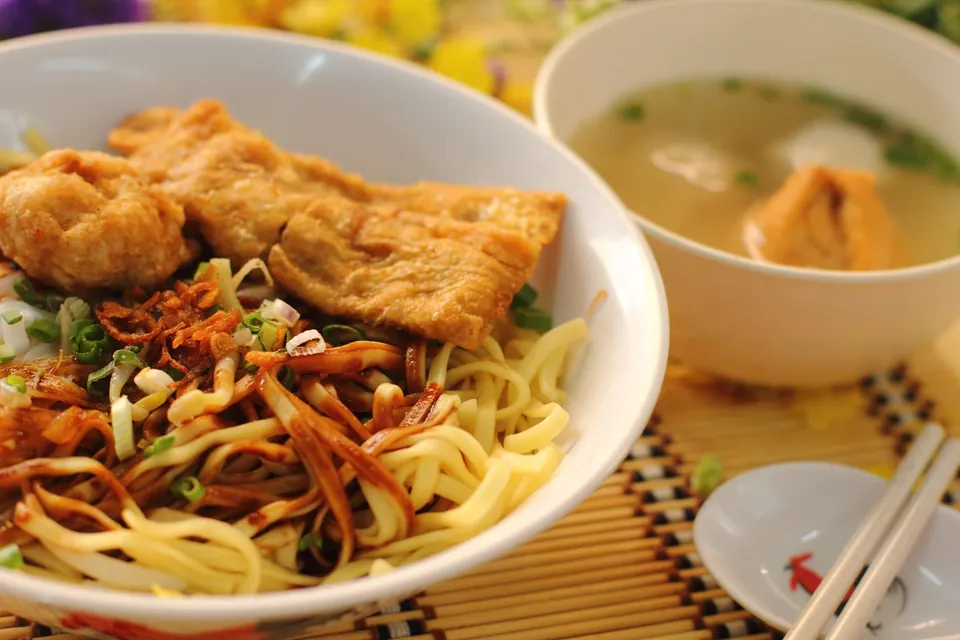
Next, decide how the bowl is served. In the soup version (汤, often said as "tong") the noodles and toppings sit together in clear broth. In the dry version (干捞, "kon loh") the noodles are tossed in a soy and shallot oil dressing, and the toppings usually come in a small bowl of soup on the side.
- Choose soup for a light, warming meal where the broth carries the flavour of the fish balls.
- Choose dry for a richer, more seasoned bowl, with the soup to sip between bites.
- Fried toppings such as Jow Yuan and stuffed beancurd skin stay crisper on a dry bowl; in soup they soften and soak up the broth.
Step 3: pick your toppings
This is the heart of the order. Many stalls serve a mixed bowl with all five toppings by default; others let you point at what you want or ask for extra pieces. Knowing the names helps.
| Topping | Chinese name | What it is | Our product page |
|---|---|---|---|
| White fish ball | 西刀鱼丸, often called 鱼蛋 | Smooth, springy and mild | Kampar fish balls |
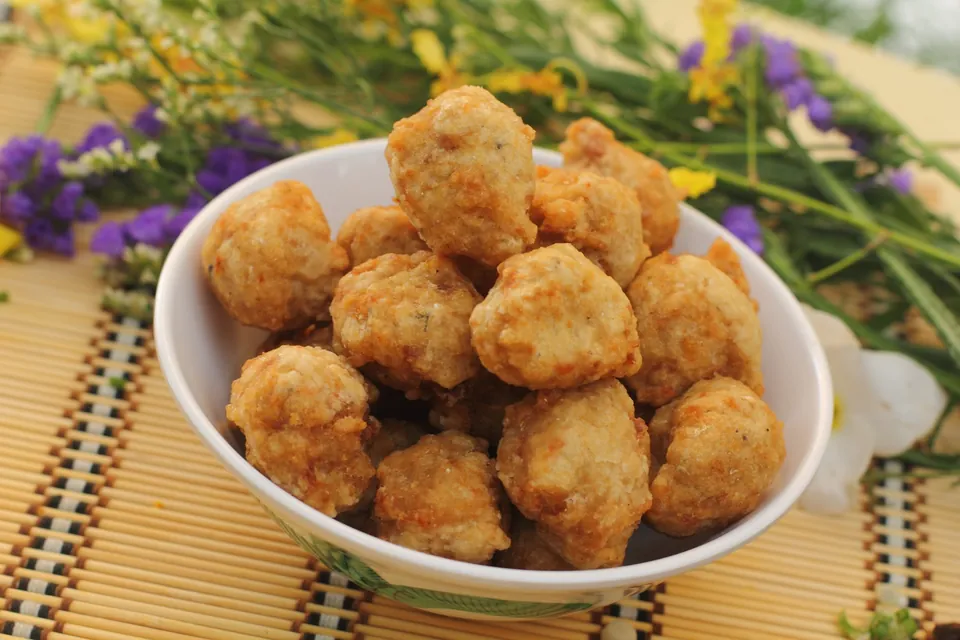
| Fried fish ball | 炸鱼丸 (Jow Yuan) | Golden outside, soft inside | Fried fish balls |
| Dried cuttlefish ball | 吊片飞丸 | Fish ball with dried cuttlefish, savoury | Dried cuttlefish fish balls |
| Stuffed beancurd skin | 酿腐竹 | Beancurd skin rolls, fried golden | Stuffed beancurd skin |
| Stuffed tofu | 酿豆腐 | Tofu stuffed with fish paste | Stuffed tofu |
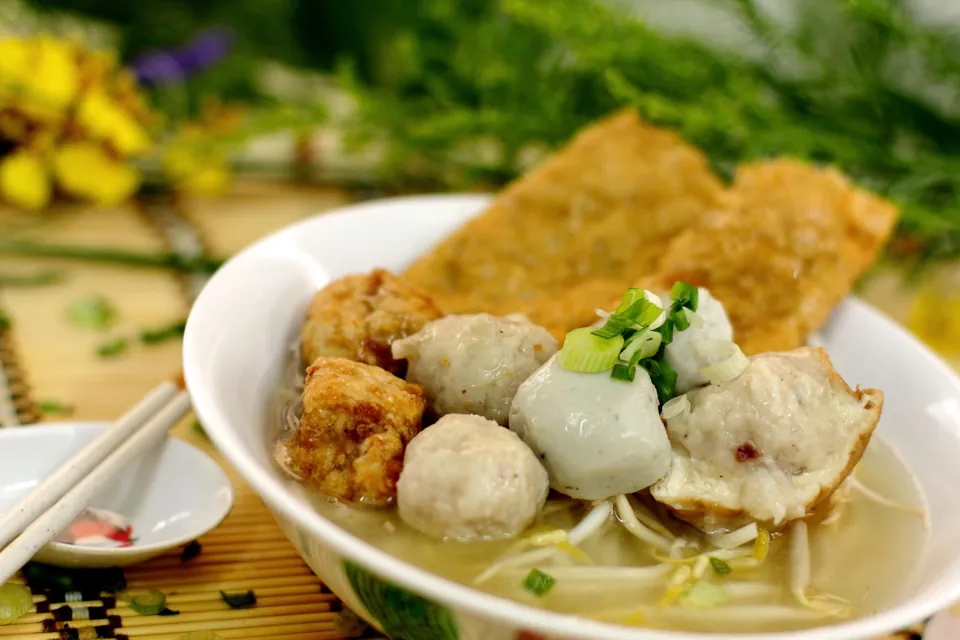
If you only want some toppings, name them: "鱼蛋 and 酿豆腐 only", for example. If you love one in particular, ask to add an extra piece. Prices and portion sizes are set by each stall, so it is fine to ask before you order.
Step 4: chilli, garnish and the little extras
Most bowls arrive with chopped spring onion and sometimes fried shallots. Chilli is often served on the side so you can control the heat.
- Cut chilli in soy sauce: the classic dip for fish balls; dip each piece rather than pouring it over.
- Chilli sauce: sweeter and milder, good with fried fish balls.
- White pepper: a shake over a soup bowl lifts the broth.
- No spring onion: ask for it when you order if you prefer your bowl without.
Useful phrases for ordering
Stall owners in Perak often speak Cantonese, Mandarin, Malay and English, so any of these will do. These short phrases are widely used in Malaysian kopitiams.
| You want | Say (Chinese) | Notes |
|---|---|---|
| Dry yellow noodles | 干捞黄面 | "Kon loh wong min" in Cantonese |
| Soup with kuey teow | 粿条汤 | Name the noodle, then "tong" |
| Add a fried fish ball | 加一粒炸鱼丸 | Swap the topping name as needed |
| No spring onion | 走葱 | "Jau chung"; 走 means "without" |
| Less noodles | 少面 | Handy if you want more toppings |
| Takeaway | 打包 | "Da bao"; soup is usually packed separately |
Kopitiam etiquette
A kopitiam is a traditional coffee shop where several stalls share one space. A few habits make the visit smoother:
- Find a table first, especially at busy breakfast and lunch hours, and note its number if there is one.
- Order your noodles at the fish ball noodle stall. Many stalls bring the bowl to your table.
- Order drinks separately. In many kopitiams the drinks come from the shop itself, not from the food stalls.
- Pay as the stall asks: some collect when the bowl arrives, others when you order.
- Return trays or stack bowls if the shop asks customers to, and leave the table ready for the next diner.
Kopitiams are busiest in the morning, when fish ball noodles are a breakfast favourite. Many stalls close once they sell out, so go early if you have a particular stall in mind.
Recreate the kopitiam bowl at home
The bowl is simple to make once you have the toppings. Our Kampar fish ball noodle guide walks through the broth, noodles and both serving styles, and the guide to the five core ingredients explains each topping in detail. For timings, see how to cook fish balls.
- Simmer a light anchovy or chicken broth and season it with salt and white pepper.
- Heat the fish balls, dried cuttlefish balls and stuffed tofu in the broth until hot right through.
- Blanch your chosen noodles and some greens, then drain.
- For soup, add the noodles and toppings to a bowl and ladle over the broth. For dry, toss the noodles in the dressing and serve the toppings in soup on the side.
- Add the fried fish balls and stuffed beancurd skin last, following the pack, and finish with spring onion and cut chilli in soy sauce.
Running a stall? Serve the full five
Regular customers notice when a topping is missing. If you run a noodle stall, kopitiam or restaurant, offering all five toppings lets customers order a true Kampar bowl. Our main line is exactly these Kampar ingredients, and wholesale is mainly these five. Our guide for restaurants and noodle shops covers portions and weekly quantities, and the wholesale page explains how to ask for a quotation.
The family recipe behind the toppings
Our fish balls come from a family recipe that dates from 1968, handed down from the owner's parents. Over the years we have improved only the cleanliness of production and the quality of the fish; the taste has stayed the same. KAMPAR FISH BALL SDN. BHD. was incorporated in 2009 and makes its Kampar ingredients in Subang Jaya, Selangor. Read more about us.
Quick answers
What is 金宝粉?
It is Kampar fish ball noodles: noodles in a clear broth or a dry dressing, topped with five classic toppings: 西刀鱼丸 (鱼蛋), 炸鱼丸, 吊片飞丸, 酿腐竹 and 酿豆腐.
What does 鱼蛋 mean on a menu?
It is a common name for the white fish ball. For our products, 鱼蛋 and 西刀鱼丸 are the same thing.
Should I order soup or dry?
Try both. Soup is lighter and lets the fish balls flavour the broth; dry (kon loh) is richer, with soup on the side.
Can I buy the toppings to make the bowl at home?
Yes. We sell the five toppings retail and wholesale. Contact us to ask about current products and quantities.